
How Does A Composting Toilet Work? + What It’s Like

Composting toilets are a great option for van life. They’re easy to install and maintain, and they reduce environmental impact while saving water. Unlike many alternative toilet options for van life, composting toilets don’t require chemicals or a black tank for sewage. But how does a composting toilet work?
In this article:
- what is a composting toilet
- how does a composting toilet work?
- what it’s like to use a composting toilet
- tips for maintaining and emptying it your composting toilet
Disclaimer: This article features some affiliate links. I only endorse things I’ve personally used or that come highly recommended by trusted peers. If you purchase anything I mention using my referral links from Amazon, REI or other retailers I may receive a small commission. However, there is never extra cost to you. You can read more here. Thank you for your support.
What is a Composting Toilet?
Let’s start at the beginning. What is a composting toilet?
A composting toilet is a type of toilet that converts organic human waste into compost, which can be used as fertilizer.
Composting toilets come in various designs, but they all operate by allowing waste to decompose naturally with the help of microbes.
How Does a Composting Toilet Work?
Composting toilets work by breaking down human waste through a natural process of decomposition.
Through the decomposition process a nutrient-rich compost is produced and can be safely used as fertilizer.
The compost produced is safe to dispose of like normal trash, which gives anyone living on the road an easier way to “dump”.
Here’s how a composting toilet works:
- The solids tank is filled with a carbon-rich medium, like coco coir.
- Deposits are made to the Toilet bank.
- Instead of flushing the waste away with water, the waste is deposited into a holding tank or chamber located beneath the toilet seat. Eliminating the flush is how composting toilets save water!
- The toilet is usually equipped with a ventilation system that helps to remove any unpleasant odors and maintain a healthy environment of oxygen and balanced moisture for the decomposition process.
- Microbes and other organisms present in the holding tank break down the waste into compost over a period of several weeks or months, depending on the conditions and the type of composting toilet.
- Once the compost is fully decomposed, it can be safely removed from the toilet and used as fertilizer for plants or disposed of according to local regulations.
Most composting toilets are designed to separate the urine and solid waste to optimize the decomposition process and eliminate odor, while others allow both to mix together. A urine diverter for composting toilet separates urine for a faster decomposition process.
Urine diverting toilets undergo aerobic composting. Composting toilets which hold the liquids and solids in the same tank undergo anaerobic composting, which is a much longer process.
Aerobic Vs. Anaerobic Composting
There are two ways decomposition occurs: aerobic composting and anaerobic composting.
Aerobic composting happens in the presence of oxygen. During this process aerobic bacteria produce heat which can sterilize human waste. Nature is neat!
Our aerobic bacteria buddies need a few things to thrive: oxygen, some moisture (but not too much!), a nice carbon-nitrogen balance, and a balmy environment of 60-100℉.

You remember that nasty stinky latrine at summer camp? The one you had to hold your breath in? It’s frequently assumed that all composting toilets will smell that way. Surprise! If you have a urine diverter for your composting toilet it won’t have that smell. Here’s some more science on why…
Anaerobic composting happens without oxygen and is the bacteria source responsible for that nasty latrine smell you so vividly remember. Unlike aerobic bacteria, we don’t really like anaerobic bacteria so much- they’re really slow to decompose organic waste and they smell really bad during the process.
Anaerobic bacteria like an environment that’s opposite to what aerobic bacteria prefers. Wet, nitrogen-rich environments without oxygen will allow anaerobic bacteria to thrive.

Since urine contains a lot of nitrogen (something we don’t want because it encourages smelly anaerobic bacteria), composting toilets use a diverter which stores urine in a separate container from the solids.
By diverting urine the compost is able to maintain proper lower moisture levels and higher carbon levels, allowing aerobic bacteria to thrive.
To further support aerobic bacteria, some composting toilets use an agitator to mix the compost and deliver fresh oxygen throughout the organic material.
Airhead and Nature’s Head composting toilets have agitators and ventilation systems to aid with composting.
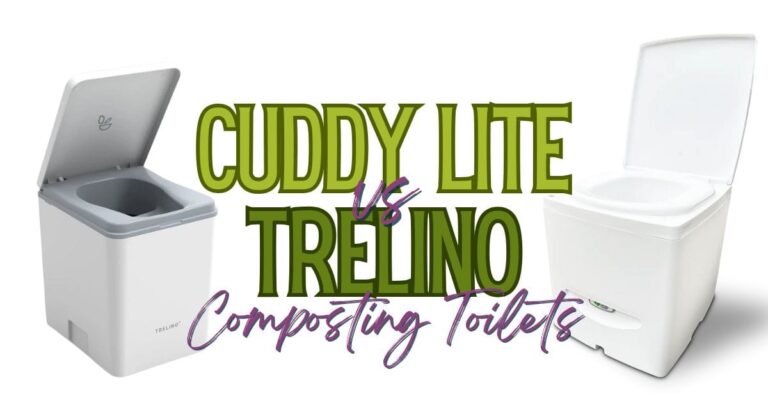
Trelino and Boxio are budget composting toilet options for van life, and they do not come with an agitator or ventilation system so the composting process will take longer.
Types of Composting Toilets
There are two main types of composting toilets: self-contained and central.
Self-Contained Composting Toilets
Self-contained composting toilets are designed for use in a single location, such as a van, RV, boat, tiny house or cabin.
They typically have a built-in composting chamber and are completely self-contained. The composting toilet options for van life fall in this category.
Central Composting Toilets
Central composting toilets, on the other hand, are designed for use in multiple locations and are typically found in parks, campgrounds, and other public spaces.
Sometimes these are called split systems, and unlike a self-contained system these can flush.
These toilets typically have a separate composting chamber that is located away from the toilet, similar to how a septic system works.
What’s It Like Using A Composting Toilet?
Using a composting toilet is fairly straightforward. It’s the same as using a regular toilet plumbed to a water source and sewer system – sit and do your business.
Usually, it’s also possible for men to stand and use a composting toilet, but your aim is really important because liquids must not enter the solids container.
The primary ways a composting toilet is different than using a typical toilet is actually what happens before and after.
Before, you’ll need to prep the solids bin with composting material. Typically, this is done once every few weeks. After you empty the solids tank, you’ll put fresh composting material in.
After, there’s no flush! This can be a weird adjustment. Just close the lid and you’re all done.
Prepare the Composting Toilet
Before you can use the composting toilet it needs to be prepared with a composting medium.
Acceptable compost bedding includes any organic material, such as sawdust, peat moss, or coconut coir, that helps to absorb moisture and facilitate the composting process.
I use this coconut husk material from amazon and it works well for several weeks or longer.
Use the Composting Toilet
When you’re ready to use the composting toilet, simply sit down and do your business as you would with any other toilet.
It’s important to note that you should only use toilet paper that is designed to break down quickly. My preference is Scotts because it’s septic safe and breaks down easily.
If you want to use fancier toilet paper, you can – you’ll just need to empty your solids bin more often, or place your used toilet paper into a trash can instead of the toilet.
Close the Lid
Once you’ve made your “bank deposit”, close the lid on the toilet to help control any odors and keep out flies and other insects.
Tips for Maintaining a Composting Toilet
Maintaining a composting toilet is relatively easy, but there are a few things that you should keep in mind to ensure that your toilet works properly and lasts for years to come.
Monitor Moisture Levels
Composting toilets work best when the moisture level is between 40% and 60%.
If the moisture level is too high, it can slow down the composting process and cause odors. If the moisture level is too low, it can slow down the composting process and prevent the waste from breaking down properly.
To monitor the moisture level, you can use a compost moisture meter or simply check the composting chamber for any excess moisture or dryness.
I have found this is pretty easy to eyeball. You’re looking for material that looks like damp sawdust – it’s clearly holding moisture (there are no dry spots), but there aren’t visible signs of water pooling.
Use Compostable Toilet Paper
Regular toilet paper can take a long time to break down and can clog the composting chamber.

To avoid this issue, use toilet paper that is specifically designed to break down quickly and easily. You can find compostable toilet paper at most eco-friendly stores or online.
I usually find Scotts brand in most grocery stores, Target and Walmart.
Avoid Adding Non-Organic Materials
While composting toilets are only designed to break down organic human waste and toilet paper, there are certain materials that should never be added to the toilet.
This list includes plastics, metals, chemicals, and any other non-organic materials. These materials can contaminate the compost and make it unusable.
Keep the Composting Toilet Clean
Regular cleaning is important for maintaining a composting toilet. This includes wiping down the seat and lid with a mild detergent and water, as well as cleaning the composting chamber when it needs to be emptied.
Typically, I dump the solids container into a black garbage bag (so you can’t see through it), tie it, and throw it away in a dumpster. I do this about once a month, sometimes once every two months.
I recommend plastic gloves so you can easily clean up. Sometimes items get stuck on the agitator inside the solids bin. I usually just grab a paper towel and pull out anything that hasn’t tipped out on it’s own.
You can spray down the inside of the solids container, but I haven’t found this to be necessary (unless you’re having an issue with bugs, then I recommend disinfecting every surface).
For the liquids container, these can typically be emptied in the same manner you go to the bathroom while hiking or camping – away from water sources, off the trail, etc.
My preference is to dump the liquids tank into a pit toilet at a trailhead, or into a plumbed toilet at a truck stop. But if these aren’t available to me I’ll walk it a ways off a parking lot or trailhead and pour it in a location where the liquid is quickly absorbed into the ground (not creating a puddle).
Monitor the Composting Process
It’s important to monitor the composting process to ensure that the waste is breaking down properly. This includes checking the composting chamber for any signs of odors, excess moisture, or other issues.
If you notice any problems, you may need to adjust the amount of carbon-rich composting material that you’re adding to the toilet.
For example, once I did not put enough composting material into the solids container. This prevented the solids from composting. The solution was to add a little more composting material. It’s much more likely you’ll have too little than too much composting material.
Benefits of Using a Composting Toilet
There are many benefits to using a composting toilet, especially for van life.
Saves Water
Composting toilets use little to no water, which is a major benefit for people living in areas with water shortages or if you want to reduce your water usage.
This also means it’s ideal for van life because endless water is not something we have while living off grid.
Reduces Environmental Impact
Composting toilets are a more environmentally-friendly alternative to traditional flush toilets, as they don’t require water or energy to operate.
Additionally, the compost that is produced can be used as fertilizer, which reduces the need for chemical fertilizers.
Off-Grid Living
Composting toilets are a great option for people who live in a van or RV, as they don’t require a connection to a sewage system or septic tank.
Best Composting Toilets for Van Life
When it comes to choosing the best composting toilet for van life, there are several factors to consider such as size, ease of use, odor control, and price. Here are three leading options to consider:
- Cuddy Composting Toilet – get $30 off with code “EVERYWHERE30” when you use the link above
- Natures Head Composting Toilet
- Airhead Composting Toilet
Not sure a composting toilet is right for you? Check out these other types of van toilets



Composting Toilet FAQs
What do you put in a composting toilet?
There are four things that go into a composting toilet; bedding material, organic human waste, biodegradable toilet paper and a composting accelerator. Everything else does not go into a composting toilet.
Carbon-rich material is used for bedding material. Common options include coconut coir, peat moss, or saw dust. It’s important that your bedding material provide carbon for the aerobic composting process and be able to help maintain proper moisture levels.
Organic waste (poo) and toilet paper can be put in a composting toilet. However, you should avoid putting any other objects into a composting toilet.
While it’s not required, some van lifers choose to add an accelerator to their composting toilets. Accelerators are specialized bacteria or enzymes which are designed to break down organic material more quickly. If you’re a more frequent guest or if there’s several people using the composting toilet, then you may need an accelerator to help process the “bank deposits”.
How often do you have to empty a composting toilet?
Over time, the solids chamber will fill up with compost. Depending on the size of your composting toilet and the number of people using it, you may need to empty the chamber anywhere from every few weeks to every few months.
My personal experience, as a single user, has been that emptying my solids tank every 2 months is more than enough, and could probably be done even less frequently.
If you’re using a urine diverter for composting toilet then your liquids are stored in a separate tank which should be emptied every 1-3 days, depending on use and capacity. If left for too long the liquids tank can develop an odor.
It’s important to factor tank capacity when deciding which composting toilet to buy. For example Airhead vs Nature’s Head composting toilets have different capacity sizes – Nature’s Head will hold more liquids and more solids than Airhead.
Do composting toilets smell?
When properly maintained, composting toilets should not produce any significant odor. The composting medium helps to absorb moisture and prevent the growth of anaerobic bacteria that cause odor. Some models also have a ventilation system to remove any odor that may be present.
Are composting toilets difficult to maintain?
Composting toilets require regular maintenance to ensure proper functioning. This includes adding a composting medium to the solid waste tank, monitoring moisture levels, and emptying the liquids tank and compost bin when full. However, with proper maintenance, composting toilets are relatively easy to use and maintain.
Can composting toilets be used in all climates?
Composting toilets can be used in most climates, but some models may require additional insulation or heating to prevent freezing in cold temperatures. In extremely hot climates, it’s important to monitor moisture levels to prevent the compost from drying out too quickly. Additionally, it’s important to remember that the bacteria required in the composting process work best in temperatures between 60-100℉.
Can you pee in a composting toilet?
Yes. Self-contained composting toilets divert urine to a separate holding container from the solids to allow for optimal composting.
Can you put Toilet paper in composting toilet?
Yup! Toilet paper can be added to a composting toilet. 1-ply or septic safe toilet paper will compound more quickly than thicker brands.
Conclusion – How Does A Composting Toilet Work?
Composting toilets are a great option for people who want to reduce their environmental impact, save water, or live off-grid in a van.
They are easy to use and maintain, and with a few simple tips, you can ensure that your composting toilet works properly and lasts for years to come.
Composting toilets are a sustainable and environmentally friendly alternative to traditional flush toilets, as they do not require water, electricity, or chemicals, and they produce valuable compost instead of waste.
Exclusive DIY Van Build Discount Codes!
Cuddy CompoCloset: $30 off with coupon code “EVERYWHERE30” | composting & sealing toilets
Trelino: $15 off with coupon code “EVERYWHERE15” | composting toilets
MoonShade: $30 off with coupon code “EVERYWHEREWITHCLAIRE” | portable camper awnings
VanMadeGear: 15% off with coupon code “EVERYWHEREWITHCLAIRE” | insulated window covers
MobileMustHaves: 5% off with coupon code “EVERYWHEREWITHCLAIRE” | mobile internet solutions
The Swivel Shop: 5% off with coupon code “EVERYWHEREWITHCLAIRE” | cab seat swivels
Heatso: 5% off with coupon code “EVERYWHEREWITHCLAIRE” | 12v heaters, AC, refrigerators, power systems, & more
Vancillary: 10% off with coupon code “EVERYWHERE10” | headliner shelf & door stop kits
SimpliSafe Security System: 50% off automatically with this link | with smoke, temperature & water leak alarms
Necto Pet Temperature Monitor: 10% off with coupon code “EVERYWHERE”
MarCELL Pet Temperature Monitor: $10 off with coupon code “EWC10”
I’ll also send occasional emails with new sales, discounts and other goodies!


