
Hiking the Narrows Zion National Park: Gear, Tips + What to Expect

Hiking the Narrows in Zion National Park is one of the most unique and iconic trails in the entire U.S. National Park system. On my recent trip to Zion, I hiked through the Virgin River, flanked by towering canyon walls hundreds of feet high. It’s definitely one of the coolest hikes I’ve done to date, and I learned quite a few tips about hiking the Narrows!
In this guide, I’ll walk you through everything you need to know to plan your own hike, from the best time to go and gear rentals you’ll definitely want to get (depending on the season), and trail tips.
In This Article:
- What gear you actually need and where to rent it
- Key tips to stay safe and comfortable while hiking the Narrows
- What to wear and how to plan your day
- My personal experience hiking the Narrows
Disclaimer: This article features some affiliate links. I only endorse things I’ve personally used or that come highly recommended by trusted peers. If you purchase anything I mention using my referral links from Amazon, REI or other retailers I may receive a small commission. However, there is never extra cost to you. You can read more here. Thank you for your support.
Zion National Park Overview
✈️ How To Get There: Fly into Las Vegas (2 hour drive)
🌄 Zion Must-See: Hike Angels Landing & The Narrows, e-bike on Zion Canyon Scenic Drive
🎟️ Best Excursions: Self-guided driving tour or an off-roading adventure
💵 Entrance Fee: $35 (good for 7 days) or free with an America The Beautiful Pass
🛌 Where To Stay: Zion Lodge, Red Cliffs Lodge Zion or Springdale vacation homes
TIP: I recommend booking your rental car with Discover Cars. They search across the major rental companies to find the best rate and let you cancel for free up to 48 hours before pickup, so you can grab a good rate now without stressing if your plans change.
Hiking The Narrows In Zion National Park
Hiking the Narrows in Zion National Park was one of the highlights of my trip! It’s definitely a hike you’ll want to add to your Zion itinerary – you can do as much or as little of the hike as you’d like, depending on your time and abilities.
There’s more preparation that goes into this hike than most trails require, so I’m covering hike details, tips I learned, and gear you’ll definitely want so you’re as prepared as possible for hiking the Narrows in Zion.
What Is the Narrows Hike in Zion?
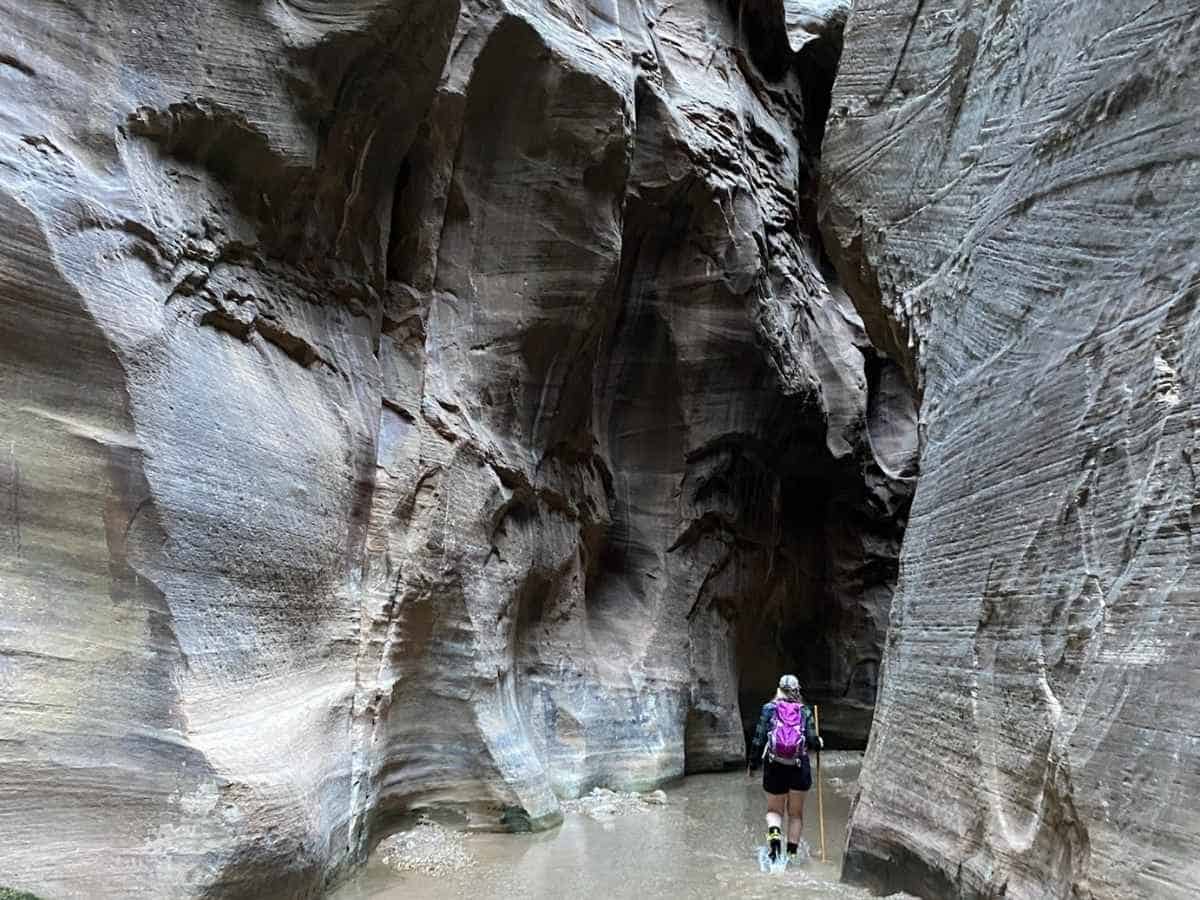
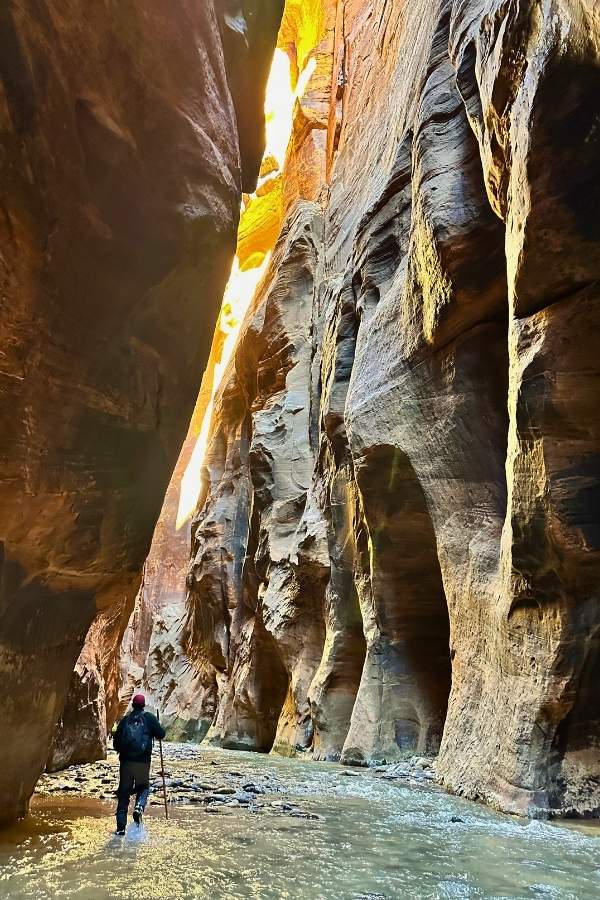
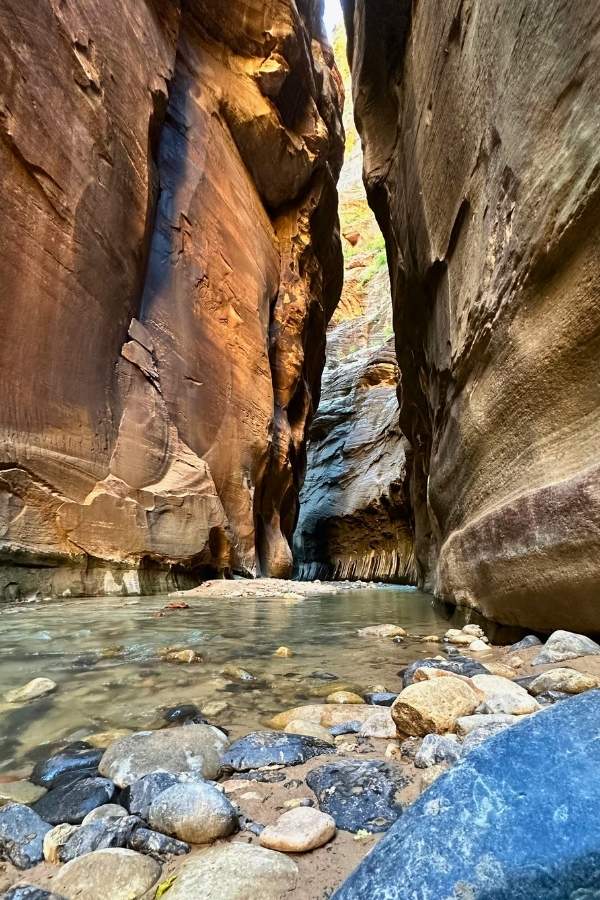
The Narrows is a slot canyon carved by the Virgin River. Unlike traditional hikes, this one takes you in the river. Literally.
There are two main ways to hike the Narrows:
- Bottom-up (no permit required): Start at Temple of Sinawava and hike upstream. Turn around whenever you’re ready.
- Top-down (permit required): Start from Chamberlain’s Ranch and hike 16 miles downstream. This route requires canyoneering skills and a Zion permit.
Save this article
Enter your email address and I’ll send it straight to your inbox!
You’ll also receive my monthly newsletter filled with helpful National Park planning tips.
Most people do the “bottom-up” route starting from the Temple of Sinawava, and this is the route I’m focusing on in this post. The hike follows the Riverside Walk for 1-mile before reaching Gateway to The Narrows (where you enter the water) and continues upstream for a little under 4 miles.
The bottom-up hike is by far the most popular and accessible. It’s incredibly scenic and flexible, allowing you to control your distance and turn back when you’re ready.
I recommend you aim to reach Wall Street, the narrowest section of the canyon with sheer walls towering hundreds of feet overhead. It’s a magical spot where the walls close in, and the sun barely peeks through. Wall Street is located about 3 miles upstream.
Distance: 8.9 miles
Elevation Change: 695 ft
Rating: Hard
Time Needed: 4-6 hours
Location: Temple Of Sinawava Shuttle Stop
How to Get to the Narrows In Zion
Zion operates a shuttle system from spring through late fall. Private vehicles aren’t allowed in Zion Canyon during shuttle season, so you’ll need to park at the Visitor Center or a designated lot in Springdale and take the Zion shuttle to the last stop.
The shuttle takes about 45 minutes to reach the final stop: Temple of Sinawava. From there, you’ll walk 1-mile along a paved trail called the Riverside Walk, which follows the Virgin River and leads to the start of the Narrows.
TIP: Catch the earliest shuttle you can. Not only will you avoid long lines, but parking will be easier and the lighting in the canyon is beautiful in the early morning. You’ll also have far fewer crowds if you’re the first group into the river.
Don’t want to hike alone? Consider booking a guided tour to hike the Narrows.
What to Expect While Hiking The Narrows In Zion
The Narrows is an out-and-back hike, so you can go as far as you feel comfortable. I hiked about 10 miles total, which took around 5 hours with breaks for snacks and photos.
If you’re aiming for a shorter experience, even 2 to 4 miles can give you a taste of the river canyon without overexerting yourself. It’s worth hiking in past the first mile, because that’s where the crowd thins substantially.
Someone described the first mile of this trail “like being in Disney World” and after hiking it I can absolutely see why. It can be a chaotic mess of crowds.
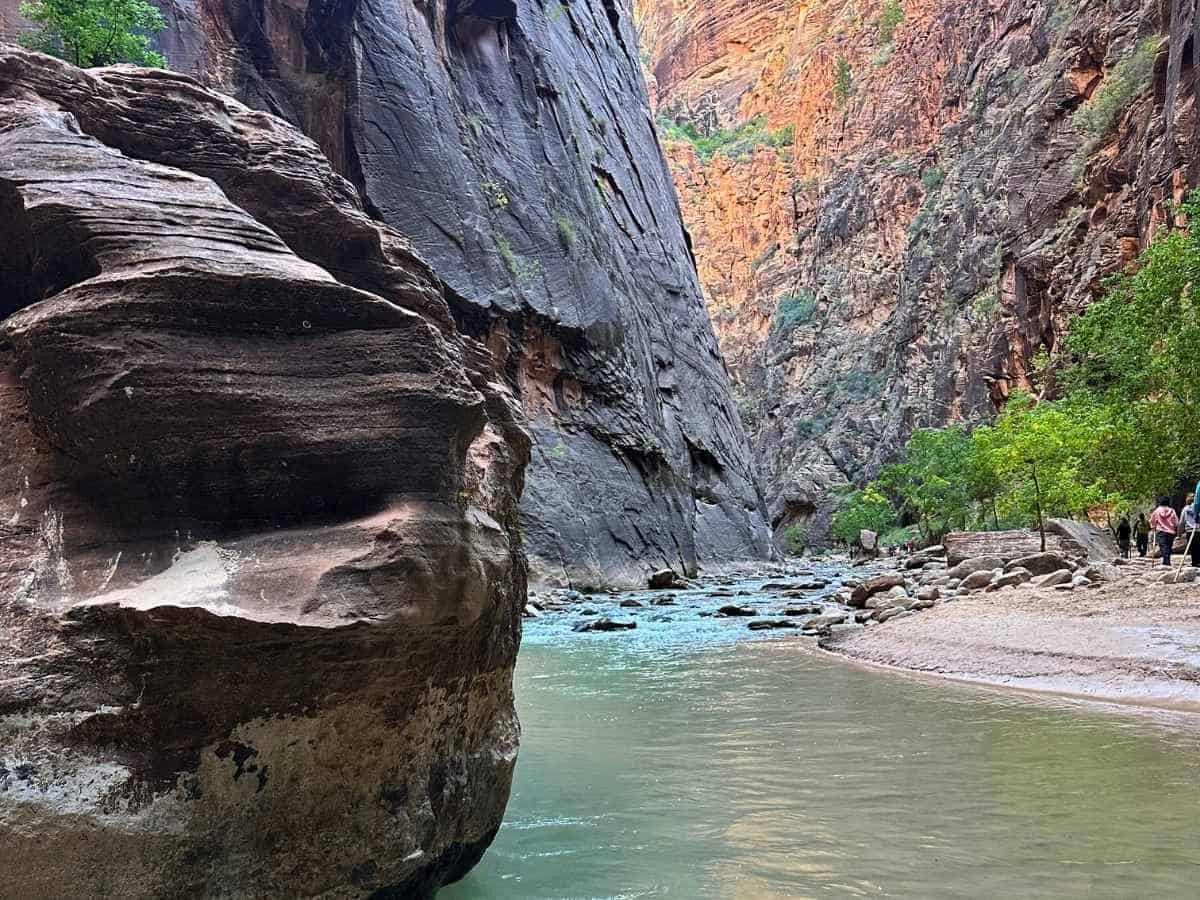
Expect to be in the river at least 80% of the time (maybe a little less if you’re visiting during summer when the river levels are lower). You’ll be walking over slick river rocks, through ankle to waist-deep water, and occasionally scrambling up or around boulders.
We passed through several breathtaking sections, including one wide opening where we took a break for a quick snack along the river bank. There was a small beach-like clearing that made the perfect picnic spot with some large boulders to rest on.
Water Temperature
In October, the water was cool but not freezing. I was comfortable in neoprene socks, hiking boots, shorts and a long sleeve shirt. As long as your feet are warm you’ll be much more comfortable, so I highly recommend renting neoprene socks from Zion Outfitters regardless of which season you visit Zion.
In spring, the water is colder and higher due to snow melt far upstream, so waterproof pants are a smart upgrade.
If you’re visiting Zion in the spring I also recommend having some flexibility in your schedule – the trail is closed more frequently because of the risk of flash flooding so you might need to adjust which day you hike the Narrows.
TIP: The canyon is narrow, and there’s not much sunlight. Even if it’s hot outside, the temperature inside the Narrows can feel 10-15° cooler. Bring layers, even if the forecast looks sunny.
Trail Highlights
There are several noteworthy landmarks along the Narrows. These are the highlights you’ll reach, in order if you’re hiking from the bottom-up (starting at the Temple of Sinawava):
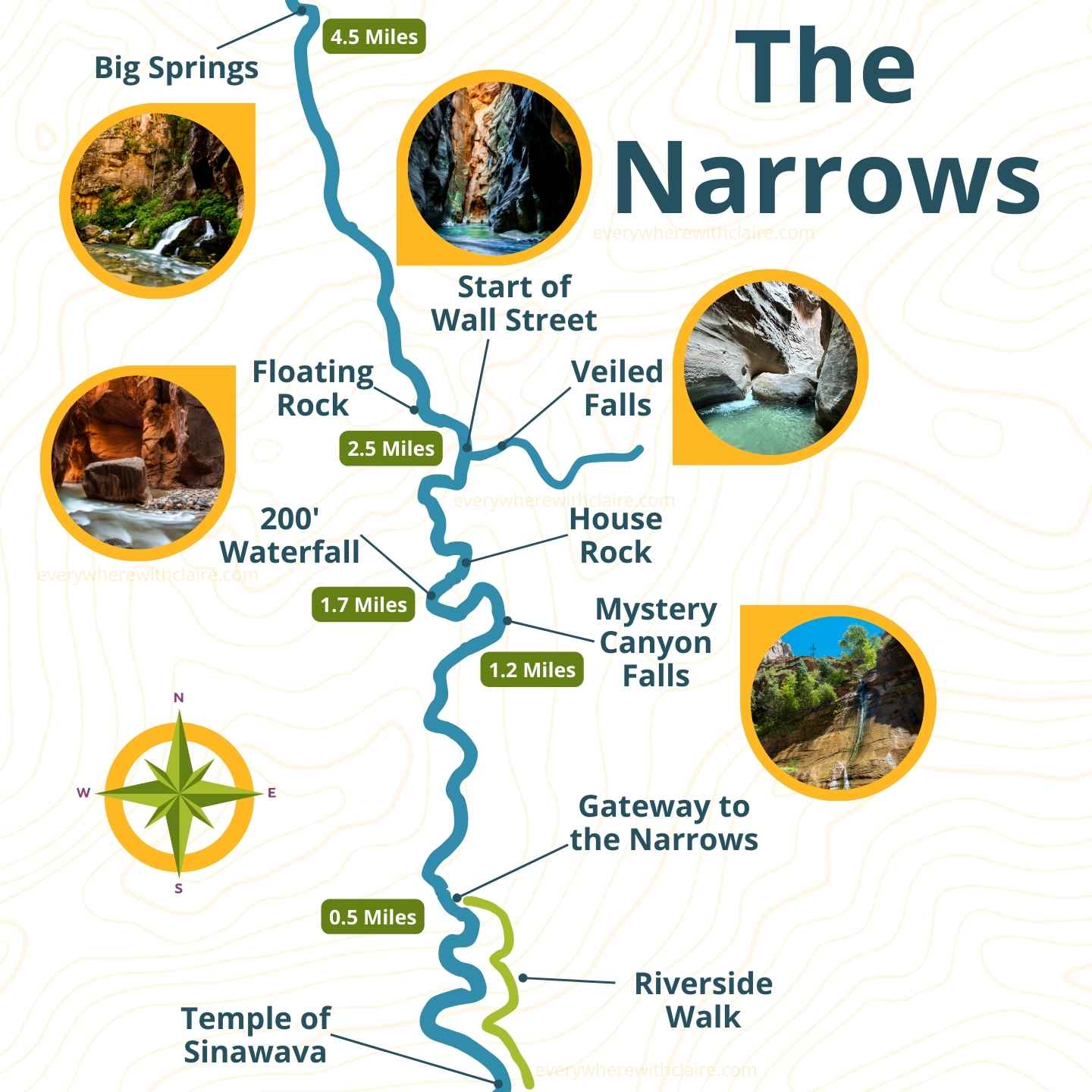
Riverside Walk: the initial 1/2-mile paved path that connects Temple of Sinawava to Gateway to The Narrows.
The Gateway to The Narrows: This is the spot where the pavement ends and the river hike begins. It’s a wide opening into the river where the water is usually gentle, so it’s an easy transition.
TIP: There is a seating area and some benches near the entrance to the river, in case you have people in your group who aren’t hiking the Narrows.
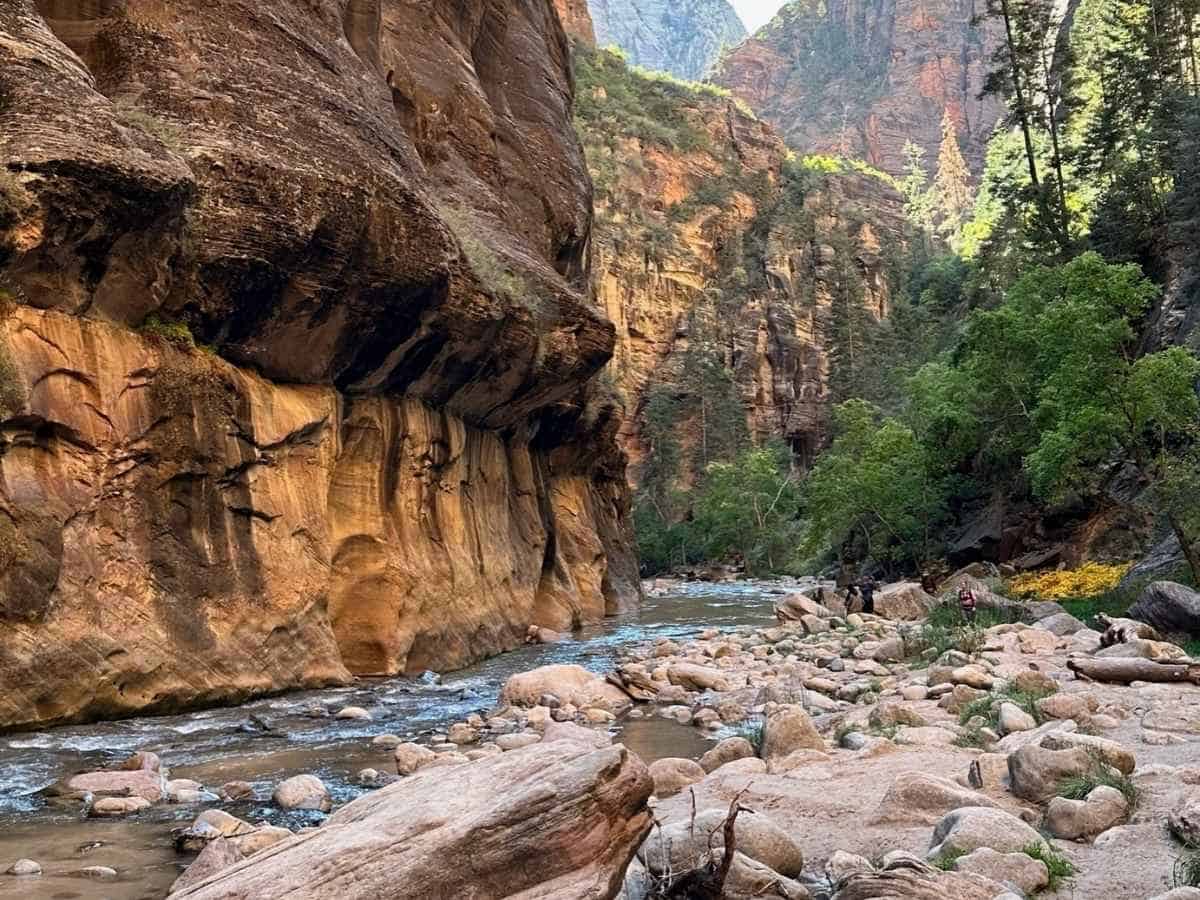
Mystery Canyon Falls: Just under 1 mile after you enter the Virgin River you’ll find a thin waterfall cascading down the 110 foot canyon wall.
Unnamed Waterfall: Hike another half mile upstream and you’ll come across a second waterfall towering over 200 feet down the canyon walls.
Wall Street: Roughly 1.5 miles into the river, you’ll reach the start of the most iconic section of the hike, Wall Street. This is where the canyon walls close in dramatically, only 20–30 feet apart but towering nearly 1,000 feet overhead. It’s also one of the deepest parts of the river, so take it slow.
Veiled Falls: Just before entering Wall Street, there’s a short detour through a tributary branch of the Virgin River. Take a right into this tiny alleyway and find a small, hidden waterfall tucked about 50 feet back.
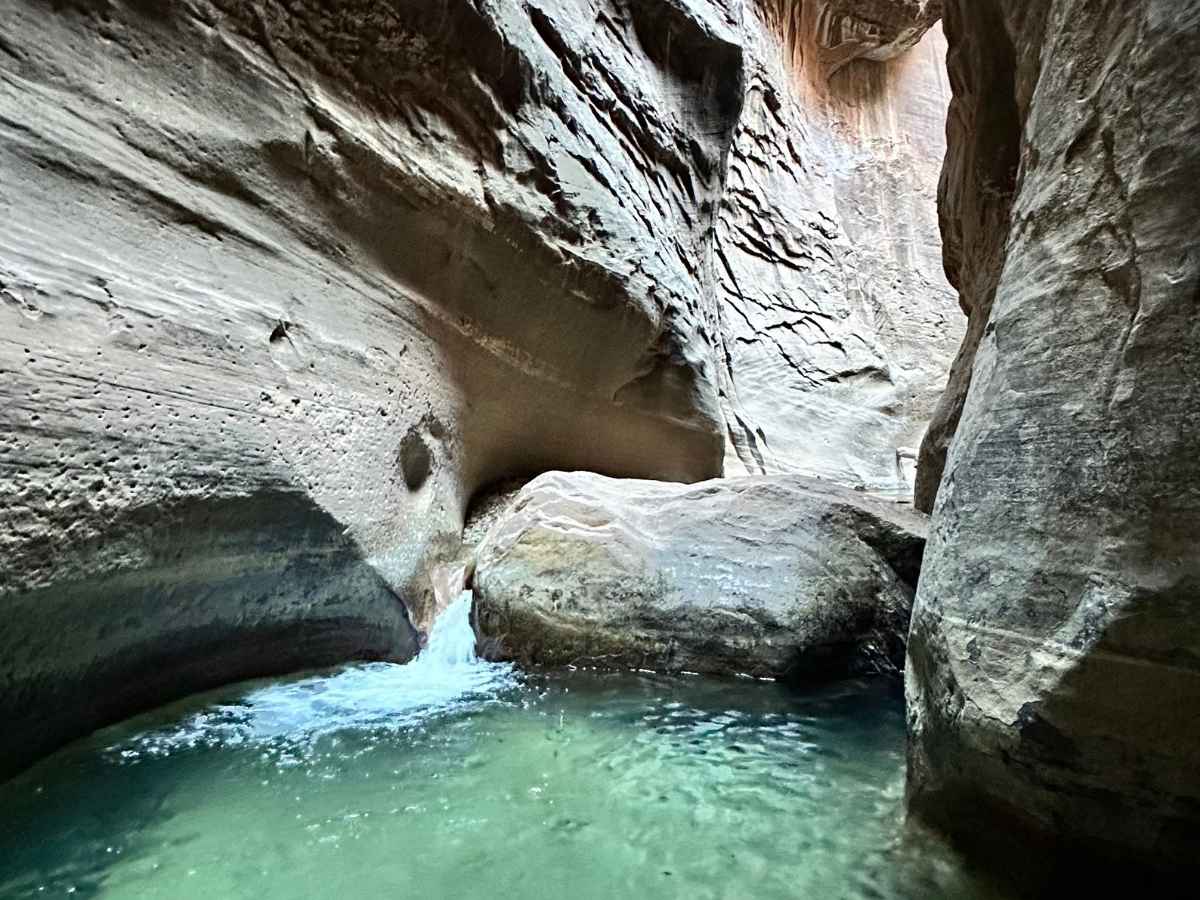
Floating Rock: Just after entering the Wall Street section, keep your eye out for a large rock that seems to “float” in the middle of the river, surrounded by swirling currents. It’s a popular rest stop and photo spot near the heart of Wall Street.
Big Springs: After 3.5 miles in the water you’ll reach Big Springs. This is your turnaround point, only permit holders can hike past. You’ll see water gushing out of the canyon walls in a lush, mossy section of the river.

River Conditions
Throughout the year the water temperature, flash flood risk and current flow rate varies. These are the conditions and gear you’ll need depending on which season you hike the Narrows.
|
Season |
Gear Needed |
Water Temp |
Flash Flood Risk |
Crowds |
|---|---|---|---|---|
|
Spring |
Dry pants or full drysuit |
40–50°F |
High (due to snowmelt) |
Low to Moderate |
|
Summer |
Quick-dry clothes + neoprene socks |
60–70°F |
Very High (monsoon season) |
Very High |
|
Fall |
Quick-dry clothes + neoprene socks |
50–60°F |
Moderate |
Moderate |
|
Winter |
Full drysuit, neoprene gloves + socks |
30–40°F |
Low |
Very Low |
NOTE: The Narrows is often closed in April due to runoff.
🦠 Bacteria In The Virgin River
You might’ve seen the warnings about cyanobacteria in the Virgin River and wondered if hiking The Narrows is still safe. The short answer: yes, but with a few precautions.
Cyanobacteria are naturally occurring bacteria that can form mats on river rocks and release harmful toxins. These toxins aren’t always present, but when they are, they can be dangerous to humans and pets, especially if ingested.
The National Park Service regularly monitors the water and issues advisories based on current conditions. Before your hike, check Zion’s official site or ask a ranger about the current advisory level. Warnings are also posted at the trailhead.
You’ll want to avoid drinking the river water (even filtered), keep your head above water, and steer clear of any visible algae mats, which usually look like slimy green or brown clumps stuck to the rocks.
That said, most people hike The Narrows without issue, and the moving water tends to dilute any potential toxins. So while it’s important to be aware of the risk, it’s not a reason to skip the hike.
TIP: Bring plenty of your own water and wash your hands before eating.
What Gear Do You Need for Hiking the Narrows?
You don’t need to buy expensive gear to hike the Narrows. I rented everything I needed from Zion Outfitters, conveniently located right next to the park entrance and shuttle stop. Their rental process was easy, quick, and surprisingly affordable.
Here’s what I rented (and highly recommend):
- Neoprene socks to keep your feet warm
- Canyoneering boots for better traction on slippery rocks
- Wooden walking stick for balance in the river
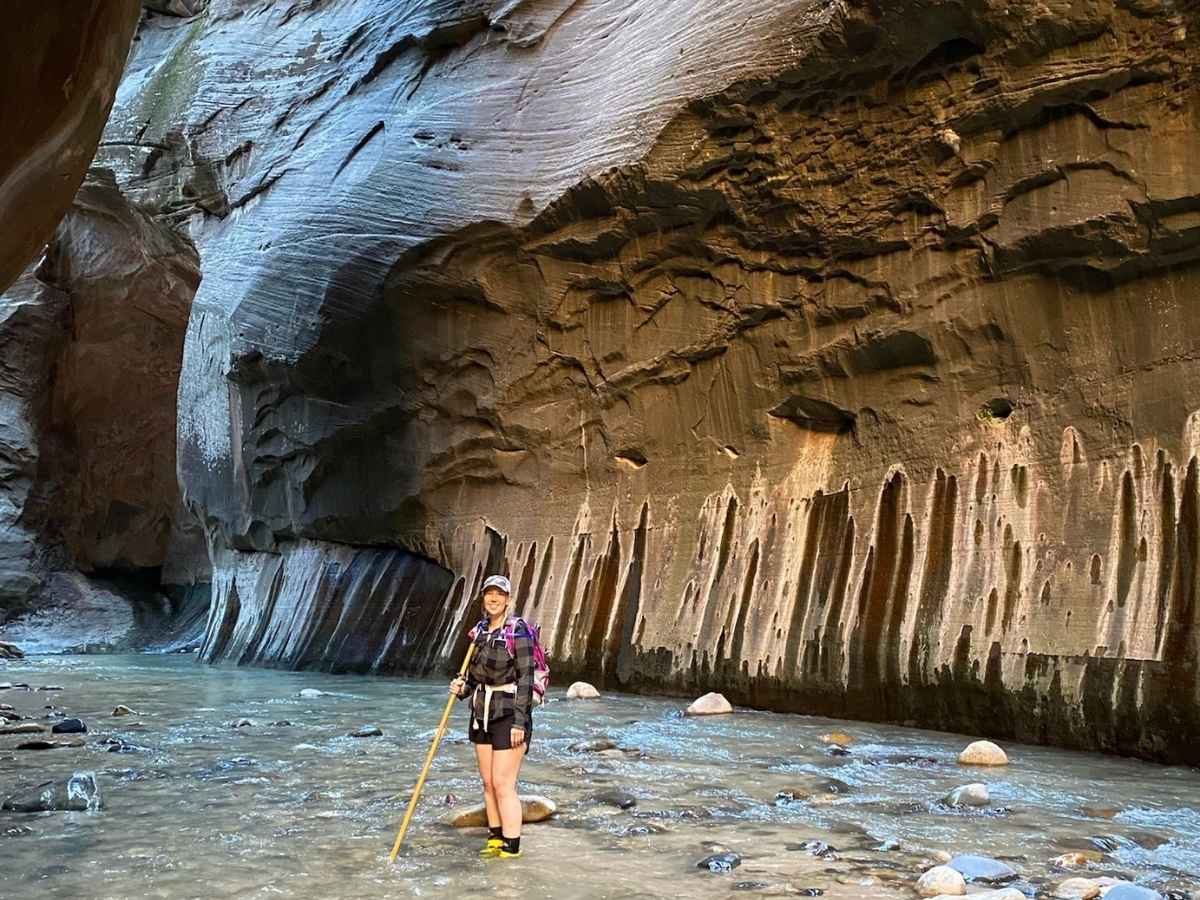
I considered buying my own pair of Neoprene socks and using my own hiking boots and trekking poles but ultimately decided against it. Mostly because I didn’t want to spend the rest of my trip hiking in wet boots. Ultimately, it was the right call and I’m glad I rented gear.
Renting from Zion Outfitters is really easy, and my daily rental was only $32. After you park, you can walk over to Zion Outfitters (right behind the shuttle stop) and pick up your gear.
I almost passed on the wooden walking stick, mentioning to the store clerk that I had trekking poles I could use. She urged me to use the stick (included in the cost of rentals) because the large rocks along the riverbed would destroy my trekking poles… she was right!
Any stick will work, you don’t need one from Zion Outfitters, but you’ll definitely want something to help stabilize yourself in the current.
There were a few places where the current was so strong, or the river was deeper, and I would not have been able to cross on my own without having the stick to lean into. (As I write this, I realize it sounds scarier than it was. This only happened 2-3 times and without the stick I would have gotten wet, but not hurt.)
Also pack:
- A dry bag or waterproof backpack liner
- Snacks or a packed lunch
- Refillable water bottle or hydration bladder
- Quick-dry layers (no cotton!)
- A waterproof phone case
TIP: Your gear will get wet. Assume everything in your backpack might too, so keep valuables in waterproof containers or bags. A small towel and dry socks in the car afterward are a bonus. (These are my favorite travel towels)
TIP: Download this self-guided audio tour of Zion National Park for your trip. It’s just like having your own tour guide to point out landmarks, interesting history and geological explanations, except for a fraction of the cost (less than $20), and on your own schedule.
Once you download it to your phone, the guide uses your GPS signal to automatically play whenever you’re near a landmark, so it works even without cell service. You can listen from your own vehicle, or while biking or riding the shuttle.
Tips for Hiking the Narrows
Post-Hike Tips: What to Do After Hiking the Narrows
After your hike, I recommend heading straight to Camp Outpost in Springdale for lunch and a margarita. It’s casual, delicious, and the perfect post-hike reward. I ordered the Mission Salad and devoured it in about five minutes flat. Zero regrets.
Other great spots to eat nearby:
- Zion Brewery: Classic brews with canyon views
- Oscar’s Café: Big portions and great outdoor seating
- MeMe’s Café: Local favorite for sweet and savory crepes
Best Time To Hike The Narrows
Hiking the Narrows in Zion can vary a lot during the year as water levels and flow rates change. During the spring, it’s more common for the river to be closed because of high water levels. In the summer, the risk of flash flooding and bacteria in the Virgin River increases.
Spring (March–May)
Spring can be hit or miss for hiking the Narrows. Snowmelt from the surrounding mountains causes the Virgin River to swell, and during peak runoff (usually April to early May), The Narrows is often closed due to dangerously high water levels.
Even when open, the water is cold (40s to low 50s) and dry pants or a full drysuit are necessary.
Summer (June–August)
Summer is the most popular time to hike The Narrows, but it’s also when flash flood risk is at its highest due to monsoon season. Flash floods can come with little warning, even on sunny days, so always check the daily flood forecast and be prepared to turn back.
On the upside, water temperatures are more manageable (usually in the 60s or 70s), so you can skip the dry gear and just hike in quick-drying clothes and water shoes. Personally, I think neoprene socks are still ideal to keep your feet warm.
Fall (September–November)
This is arguably the best time to hike The Narrows. Water levels have usually dropped back to safe levels, flash flood risk declines, and daytime temps are still pleasant. I also think, in general, that fall is the best time to visit Zion National Park, and has been my favorite season to go.
In September and early October, the canyon still feels warm enough for hiking in shorts. By late fall, the water and air temperatures cool off, so you might want to rent dry pants again.
Winter (December–February)
Yes, you can hike The Narrows in winter… but it’s definitely a different experience. Water temps drop into the 30s and 40s, and air temps in the canyon can be frigid.
If you’re prepared with a drysuit (and okay with numb fingers and toes), it can be a crowd-free way to experience the canyon. Just keep in mind that shorter daylight hours and icy trails near the start can add some extra challenges.

Where to Stay Near Zion
There’s only one hotel inside Zion National Park – Zion Lodge. It’s definitely the most convenient option, especially if you want an early start hiking the Narrows because you can bike to the trailhead instead of waiting for the shuttle to start running.
There are also several great options in Springdale, which is literally right outside the main entrance to Zion (and tends to be more affordable than the lodge):
- Bumbleberry Inn – mid-range
- Red Cliffs Lodge Zion – luxury
- Cable Mountain Lodge – resort & spa
- Luxury apartment that sleeps up to 16 – vacation rental
On my recent trip I stayed in a cute, pet-friendly VRBO in Apple Valley, about 45 minutes from Zion. It was quiet, scenic, and had a great vibe. Each cabin had a fire pit (which we used every night!), and the camp store sold individual s’mores kits. Plus, on-site laundry was a lifesaver after getting everything wet from hiking the Narrows.
Save this article
Enter your email address and I’ll send it straight to your inbox!
You’ll also receive my monthly newsletter filled with helpful National Park planning tips.
Final Thoughts on Hiking the Narrows Zion National Park
Hiking the Narrows is an experience like no other. Whether you wade in for just a mile or go deep into the canyon, it’s worth having wet feet and soggy socks!
If you’re planning more than one day in Zion National Park, make sure to include both the Narrows and Angels Landing. They’re two of the best hikes in the park (and maybe the entire US?), and doing both gives you a full sense of Zion’s beauty.
With more time, I highly recommend a road trip to the Utah Mighty Five – all of the National Parks in the state!
Happy hiking!
Travel Planning Resources
These are the resources I use and recommend for planning your next trip:
Accommodations: Expedia (hotels), VRBO (vacation rentals)
Flights: Skyscanner
Rental Cars: DiscoverCars and Outdoorsy
Tours & Excursions: Viator and GetYourGuide
Travel Insurance: SafetyWing
Credit Card With Travel Points: Chase Sapphire Preferred